How Much Fuel Does a Home Generator Use? (By Size & Load)
Updated July 2026 • 8 min read
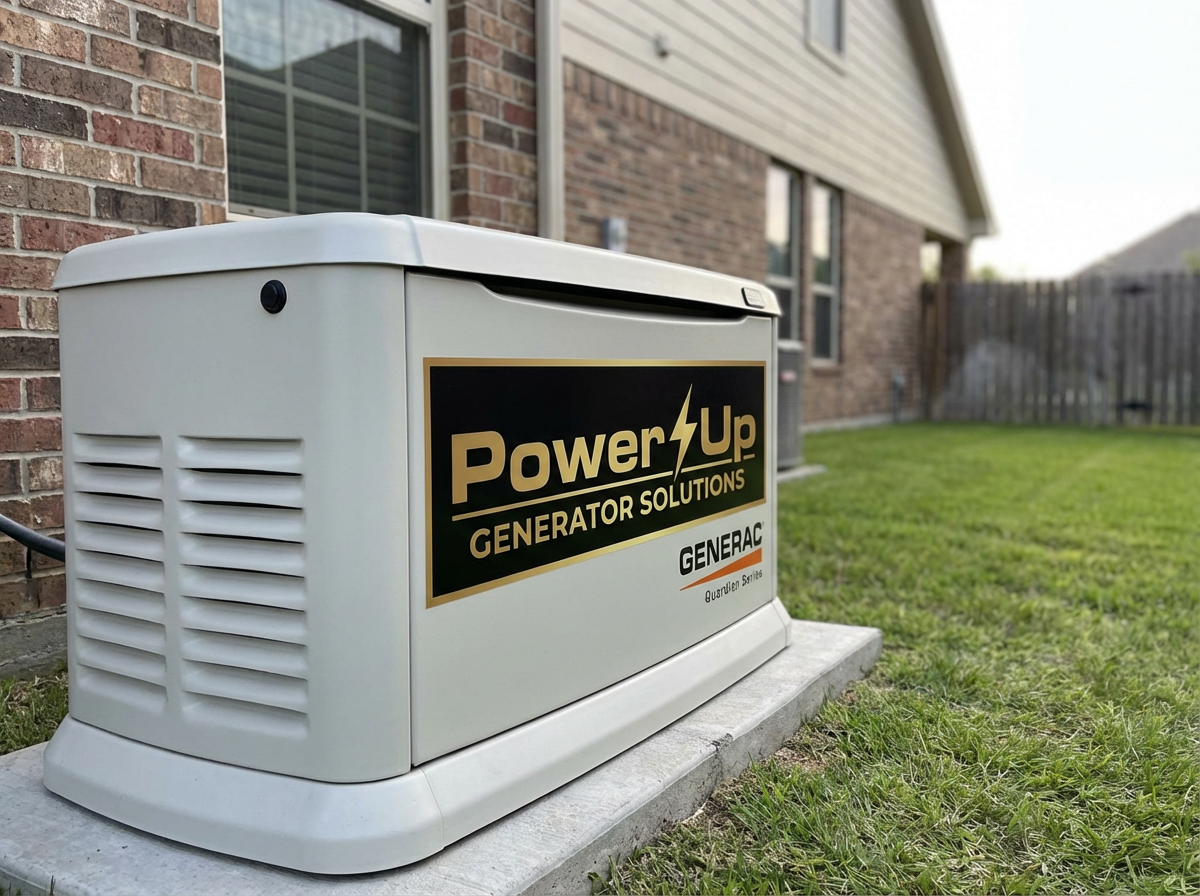
Generator fuel cost during an outage is a legitimate concern — but it is often overestimated. A properly sized natural gas generator running during a typical Kansas City or Tampa outage costs $3–$8 per hour to operate. Here is the complete breakdown by fuel type, generator size, and load.
Natural Gas Generator Fuel Consumption
Natural gas consumption is measured in therms (100,000 BTU). Generator efficiency varies by size and load percentage. These figures represent typical consumption at the specified load:
| Generator Size | 50% Load (therms/hr) | 75% Load (therms/hr) | 100% Load (therms/hr) | Est. Cost/Day (75% load) |
|---|---|---|---|---|
| 14kW | 1.0 | 1.35 | 1.87 | $32–$48 |
| 18kW | 1.3 | 1.75 | 2.35 | $42–$63 |
| 22kW (most popular) | 1.6 | 2.1 | 2.8 | $50–$76 |
| 26kW | 1.9 | 2.5 | 3.3 | $60–$90 |
Estimated costs assume $1.00–$1.50 per therm. Natural gas prices vary by region and season. Actual consumption varies with ambient temperature, altitude, and fuel quality.
Propane Generator Fuel Consumption
Propane consumption is measured in gallons. Propane produces approximately 91,500 BTU per gallon, making it slightly less energy-dense than natural gas on a cost-per-BTU basis:
| Generator Size | 50% Load (gal/hr) | 75% Load (gal/hr) | 100% Load (gal/hr) | Est. Cost/Day (75% load) |
|---|---|---|---|---|
| 14kW | 1.2 | 1.6 | 2.2 | $96–$134 |
| 18kW | 1.5 | 2.1 | 2.8 | $126–$176 |
| 22kW (most popular) | 1.9 | 2.5 | 3.2 | $150–$210 |
| 26kW | 2.2 | 3.0 | 3.8 | $180–$252 |
Estimated costs assume $2.50–$3.50 per gallon. Propane prices vary significantly by region and season. Fill your tank before peak demand (winter heating season) for better pricing.
The Natural Gas Advantage: Unlimited Supply
The most significant advantage of natural gas over propane for standby generators is not cost — it is reliability. Natural gas arrives via underground pipelines that remain operational during virtually all power outages, including major storms, ice events, and hurricanes. As long as your gas utility is supplying gas, your generator can run indefinitely.
Propane, by contrast, requires advance planning. You must have adequate fuel in your tank before the outage begins. During major regional events (hurricanes, severe winter storms), propane deliveries may be delayed for days or weeks. Running out of propane during a critical outage is a real risk that natural gas eliminates entirely.
In our service areas — Kansas City, Tulsa, Oklahoma City, Springfield, and Tampa — natural gas service is available to the vast majority of homes. We always recommend natural gas when it is available. Propane is the right choice for rural properties without natural gas access.
Propane Tank Sizing Guide
If your property does not have natural gas access, sizing your propane tank correctly is essential:
| Tank Size | Usable Propane | Days of Operation (22kW) | Notes |
|---|---|---|---|
| 250 gallon | ~200 gallons | 3–4 days | Minimum viable; requires monitoring |
| 500 gallon | ~400 gallons | 6–10 days | Recommended minimum for whole-house backup |
| 1,000 gallon | ~800 gallons | 12–20 days | Ideal for hurricane zones and rural areas |
| 1,500+ gallon | ~1,200 gallons | 18–30 days | Commercial or extreme backup scenario |
Note: Propane tanks are typically filled to 80% capacity (never completely full) due to expansion requirements. A 500-gallon tank holds approximately 400 gallons of usable propane. Also, generators require a minimum delivery pressure — a tank below approximately 20% fill may not maintain adequate pressure in cold weather.
Load Percentage and Fuel Efficiency
Generator fuel consumption is not linear with load. Generators actually become more fuel-efficient as load increases toward 75–80% of rated capacity — this is where most generators achieve their best fuel-to-power ratio. Running a generator at very light loads (below 30% capacity) is inefficient and can also cause wet stacking (incomplete combustion) in diesel units, though this is not a concern for natural gas and propane generators.
In a typical home during an outage, actual load is usually 40–75% of the generator's capacity. A 22kW generator in a 2,500 sq ft home with central AC and normal appliances will typically run at 10–16kW — a comfortable operating range that balances fuel efficiency with reliable headroom for startup surges.
Real-World Cost: What a Major Outage Actually Costs
To put these numbers in practical context, here is what you can expect during real-world outage scenarios in our service areas:
12-Hour Ice Storm Outage
$25–$45
Natural gas (22kW)
vs. $200+ in spoiled food, hotel, etc.
3-Day Winter Storm
$150–$225
Natural gas (22kW)
vs. hotel + food + pipes
7-Day Hurricane
$350–$530
Natural gas (22kW)
vs. $5,000+ displacement costs
Frequently Asked Questions
How much natural gas does a 22kW generator use per hour?
A 22kW natural gas standby generator uses approximately 2.4-3.4 therms per hour at full load and about 1.5-2.0 therms per hour at 50% load. At typical residential loads (60-75% capacity), expect 1.8-2.5 therms per hour. At current average natural gas rates of $1.00-$1.50 per therm, this equals approximately $1.80-$3.75 per hour in fuel costs.
How much propane does a 22kW generator use per day?
A 22kW propane generator uses approximately 2-3 gallons of propane per hour at full load. Over a 24-hour period with varied loads (50-75% average), expect approximately 40-60 gallons per day. At $2.50-$3.50 per gallon for propane, a 24-hour outage costs approximately $100-$210 in propane fuel. A 500-gallon tank would provide 8-12 days of continuous operation.
Does natural gas or propane cost less to run a generator?
Natural gas is generally less expensive to run than propane. Natural gas rates typically range from $0.80-$1.50 per therm, while the propane equivalent energy cost is typically $1.50-$3.00 per therm equivalent. Additionally, natural gas is delivered by pipeline — your supply is virtually unlimited during an outage, whereas propane requires advance tank filling and can run out during extended events.
How big of a propane tank do I need for a whole house generator?
For a whole house 22kW generator, a 500-gallon above-ground propane tank is the minimum recommended size, providing approximately 8-12 days of continuous operation. A 1,000-gallon tank provides 16-24 days. In areas prone to extended outages (hurricane zones, areas with severe winter storms), a 1,000-gallon tank is preferred. Underground tanks of 500-1,000 gallons are also common where HOA requirements or aesthetics are a concern.
Will my generator run out of fuel during a week-long outage?
A natural gas generator will not run out of fuel as long as your utility's gas service remains operational — which it typically does even during major electrical outages. Propane generators depend on your tank's remaining supply. For a 500-gallon tank at 50% capacity (250 gallons), you have approximately 4-6 days of operation. Planning ahead and filling your propane tank before storm season is essential for extended outage protection.
Natural Gas Generators: Unlimited Backup, Predictable Cost
Power Up Generator Solutions recommends natural gas standby generators for most homes in our service areas. As a 501(c)(3) nonprofit, we offer dealer pricing — $2,000–$4,000 below for-profit competitors. Free consultations, financing from $25/month.
816-461-9751 | Text: 816-785-1268 | www.powerupgen.com